

异步
JS不像计算密集型的程序,例如科学计算和机器学习模型,它是典型的事件驱动程序(发布-订阅模式),只有在用户触发后才会去执行。
- ES6新增了Promise
- ES2017新增了async、await
- ES2018中引入了异步迭代器和for/await循环
以上特性支持开发者将异步代码写成同步的形式
callback
在上述异步解决方案出现之前,JS异步一直通过回调的形式存在,因此也衍生出了许多关于回调的面试题:什么是回调地狱(callback hell)?如何解决回调地狱问题?
定时器
JS提供了两种定时器:setTimeout、setInterval
setTimeout的使用场景是延迟执行回调函数
// 延迟1000ms后执行回调函数
setTimeout(() => {
  console.log(123);
}, 1000);
setInterval的使用场景是定时执行回调函数,例如:轮询、定时刷新
// 每隔1000ms执行一次回调函数
setInterval(() => {
  console.log(123);
}, 1000);
事件
客户端JS编程几乎全是事件驱动的,通过addEventListener在元素上注册事件
const element = document.querySelector('.container');
element.addEventListener('click', () => {
  console.log('u click!');
});
网络事件
当需要进行网络请求,并且在请求响应之后执行的回调
function getCurrentVersionNumnber(versionCallback) {
  let request = new XMLHttpRequest();
  request.open('GET', 'http:www.example.com/api/version');
  request.send();

  // 请求响应的回调
  request.onload = function () {
    if (request.status === 200) {
      let currentVersion = parseFloat(request.responseText);
      versionCallback(null, currentVersion);
    } else {
      versionCallback(request.statusText, null);
    }
  };

  // 请求出现错误、超时的回调
  request.onerror = request.ontimeout = function (e) {
    versionCallback(e.type, null);
  };
}客户端代码通过XMLHttpRequest发起网络请求,不过在现代客户端的JS中多数情况下是使用fetch api来替代发起网络请求的。
node中的回调和事件
Node的服务器JS环境底层就是异步的,定义了许多回调和事件的API,例如读取文件的模块-fs
Node中绑定事件与客户端中不同,是通过on而不是addEventListener
promise
虽然可以通过回调函数的方式进行异步操作,但是容易出现回调地狱,且难以处理错误。虽然在处理错误时,可通过层层向上传递错误堆栈信息,但是这样非常麻烦,而且容易出错。
ES6引入Promise对象来解决回调函数中出现的问题:
- 针对回调地狱问题,提供了链式调用方案
- 针对难以进行错误处理的问题,提供了统一的catch捕获机制
promise支持传入一个executor函数,入参是两个函数,分别是resolve、reject:
- 执行
resolve函数则是将promise状态从pending -> fulfill时调用 - 执行
reject函数则是将promise状态从pending -> reject时调用
getJSON('/api/user/profile').then(displayUserProfile);虽然可以在第二个参数中处理异常,但是大多数情况下只传入一个参数。通过使用.catch()捕获异常,这样更符合传统的方式
getJSON('/api/user/profile').then(displayUserProfile, handleProfileError);getJSON('/api/user/profile').then(displayUserProfile).catch(handleProfileError);如果两者同时出现时,则会忽略catch子句,将异常抛给then的第二个参数
new Promise((resolve, reject) => {
  reject();
})
  .then(
    () => {
      console.log(111);
    },
    () => {
      console.log(222);
    },
  )
  .catch(() => {
    console.log(333);
  });

// 222
INFO
为什么说异步计算的错误很难捕获?
同步计算出错时会抛出一个异常,该异常会沿着调用栈向上一直传播到一个处理它的catch字句。
而异步计算出错时,它的调用栈已经出栈了,根本没有办法向调用者抛出异常
链式调用
链式调用方案是为了解决回调地狱问题的,使用场景是多个异步操作相互依赖,后一个异步操作依赖上一个异步操作的结果
一个错误的链式调用的例子:使用fetch API请求数据
fetch('/api/user/profile').then((response) => {
  response.json().then((profile) => {
    displayUserProfile(profile);
  });
});
这种使用方式显然违背了Promise的设计初衷,本来是要解决callback hell的,但是在使用中又变成了嵌套,因此应该修改为
fetch('/api/user/profile')
  .then((response) => {
    return response.json(); // return出一个promise对象
  })
  .then((profile) => {
    displayUserProfile(profile);
  });
resolve promise
本章主要解释resolved与fulfill的区别:
- 对于一个promise对象,resolved执行的同时promise对象就变成fulfill了
- 对于多个链式调用的promise对象,只有当所有对象的resolved执行了,才能称它们的状态变为了fulfill了(类似Promise.all())
错误处理
处理错误有两种形式:.catch(errorHandler)、.then(null, errorHandler),但是建议使用前者来捕获异常。
同时需要注意的是,使用场景不同,错误处理的方式不同:
- 后者依赖前者,并且在前者抛出异常时
不再继续执行
startAsyncOperation()
  .then(doStageOne)
  .then(doStageTwo)
.catch(logStageOneAndTwoErrors);- 后者依赖前者,并且在前者抛出异常时
继续执行
startAsyncOperation()
  .then(doStageOne)
  .catch(logStageOneError)
  .then(doStageTwo)
  .catch(logStageTwoError);
INFO
由于前端主要通过网络发生请求,在复杂的网络环境中,可能会出现网络波动导致偶发问题,可以通过如下方式进行重试:
queryDatabase()
  .catch(() => {
    // 如果发生了网络波动,重试
    return wait(500).then(queryDatabase);
  })
  .then(displayTable)
  .catch(displayDatabaseError);
并行
JS提供了三种并行的方式,分别是Promise.all()、Promise.allSettled()、Promise.race()
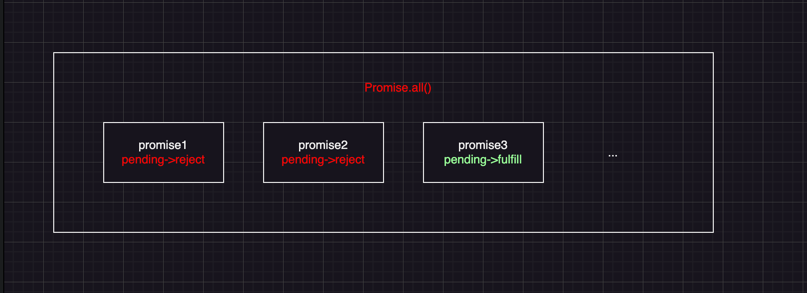
- Promise.all()
接受一组promise对象,只有当所有promise的状态都变为fulfill时(注意是都),这顶层的promise对象的状态才会变为fulfill,相当于电路中的串联

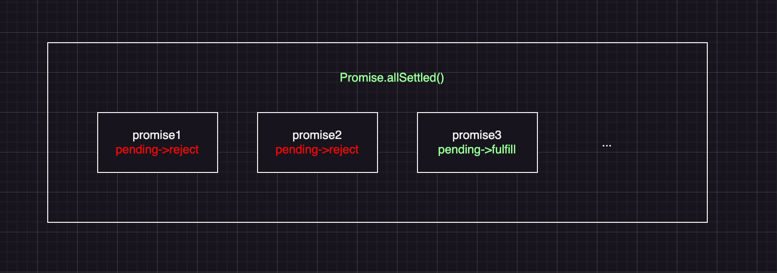
- Promise.allSettled()
接受一组promise对象,当所有promise的状态变为fulfill或reject时,这顶层的promise对象的状态会变为fulfill,并且会将每个promise的执行状态和结果返回
- Promise.race()
接受一组promise对象,返回第一个状态变为fulfill的执行结果
const promise1 = new Promise((resolve, reject) => {
  setTimeout(resolve, 500, 'one');
});

const promise2 = new Promise((resolve, reject) => {
  setTimeout(resolve, 100, 'two');
});

Promise.race([promise1, promise2]).then((value) => {
  console.log(value);
  // Both resolve, but promise2 is faster
});
// Expected output: "two"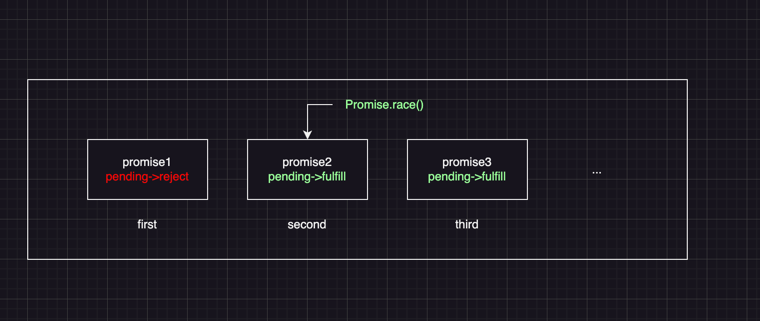
串行
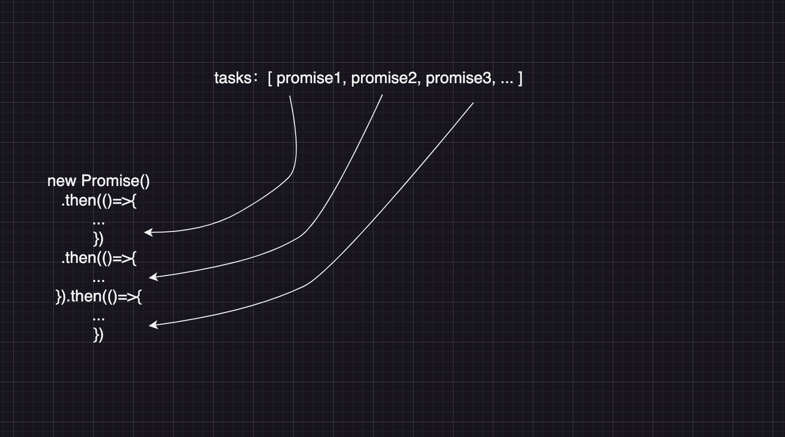
promise串行指的是:在上一个promise对象执行完毕之后(无论是fulfill还是reject)再去执行下一个promise
链式调用提供了实现promise串行的思路,总结起来有两种方式:循环(多米诺骨牌形式)和递归(俄罗斯套娃形式)
- 循环创建
const promises = [
  new Promise((resolve) => {
    console.log(1);

    resolve(1);
  }),
  new Promise((resolve, reject) => {
    console.log(2);

    reject();
  }),
  new Promise((resolve) => {
    console.log(3);

    resolve(3);
  }),
];

function loop() {
  const body = [];

  let p = Promise.resolve(undefined);

  for (let i = 0; i < promises.length; i++) {
    p = p
      .then(() => promises[i])
      .then((res) => {
        body.push(res);
      })
      .catch(() => {
        body.push(null);
      });
  }

  p.then((res) => {
    console.log(body);
  });
}

loop();- 递归创建
async和await
ES2017引入,用来简化promise的使用,使异步编程更加简便。
await
await接收一个promise对象,并返回它的resolve值或者异常。
要注意的是,await并不是阻塞JS进行,它仍是异步的。
async
await关键字需要搭配async使用,标志这个函数是异步函数。
const test = async () => {
  const result = await Promise.resolve(123);
  console.log(result);
};
test(); // 123
但是当需要执行多个异步操作时,之间没有相互依赖关系时,应该使用Promise.all发起并行请求
// 发起getJSON1请求会 阻塞到 前一个请求响应回来之后才会去执行
async function getData() {
  const response = await getJSON();
  const response1 = await getJSON1();
}

function getData() {
  const [response, response1] = Promise.all([getJSON(), getJSON1()]);
}
实现细节
ES2017解释器是将函数体分割成一系列独立的子函数,每个子函数都将被传给位于它前面的以await标记的那个promise对象的then函数中
对于Babel而言,plugin的转换规则不同,底层的原理也是不同的,例如:plugin-transform-async-to-generator插件的编译原理是将async/await转换为promise+generator
INFO
- 对于plugin-transform-async-to-generator,
async/await代码转换为ES5的原理是什么?
本质是将异步操作拆分为多个子函数,并生成一个个相互嵌套的promise对象
- 为什么在编译后的代码中常看到switch...case子句呢?
因为generator是ES6引入的,为了模拟generator(ES6的polyfill)而实现的一个步进器
异步迭代
ES2018提供了一种迭代异步操作的解决方案:for await ... of。使用场景是只有在前一个promise对象兑现时,才会去执行下一个promise对象
例如,请求一个url集合,并且依次串行请求
const urls = [url1, url2, url3];
const promises = urls.map(fetch);
使用常规for/of进行迭代
for (let promise of promises) {
  const response = await promise();
  handle(response);
}
使用新语法简化
for await (const response of promises) {
  handle(response);
}
WARNING
注意,for await ... of只适用于异步可迭代
异步迭代器
与常规迭代器([Symbol.iterator])不同,异步迭代器使用([Symbol.asyncIterator])定义,异步迭代器对象提供一个next对象并返回一个promise对象。
参考: